
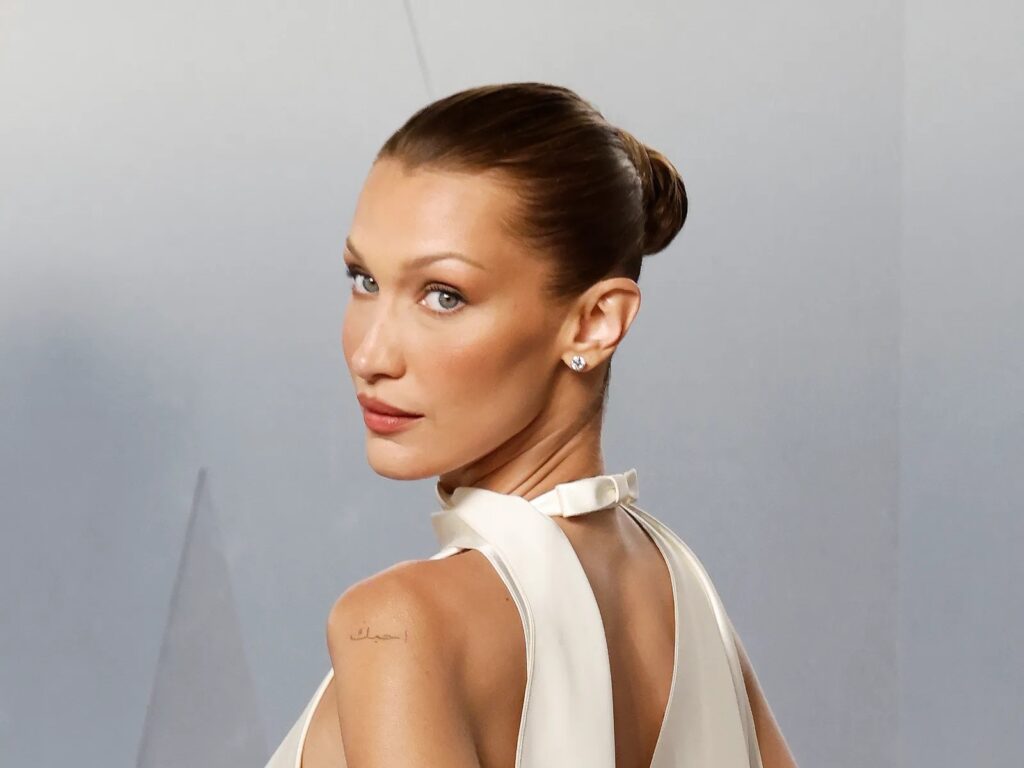

In the modern fashion ecosystem, where visibility often outweighs longevity, Bella Hadid has become something rarer than a trending face—she is a calibrated presence. Her image is everywhere, yet her essence remains carefully withheld. On the runway, she moves with a kind of engineered emotion: neither fully distant nor entirely exposed, but suspended in a space where control and vulnerability coexist.
What defines Bella today is not just her dominance in campaigns or her status within luxury fashion houses, but her ability to treat visibility as a craft. Every appearance feels intentional, as if she is negotiating between performance and self-preservation in real time. In an era of overexposure, her restraint has become its own form of authority.
This conversation is not about the spectacle of fashion—it is about the architecture behind it.
Interview
Q: In a career built on visibility, what part of yourself remains off-camera by choice?
Bella Hadid: Most of it, actually. People see the output—campaigns, shows, images—but not the recovery, the preparation, or the silence in between. I’ve learned that not everything needs to be translated into content.
Q: Your runway presence is often described as intense or precise. How do you mentally enter that space?
I don’t think of it as intensity. It’s more like focus. I try to understand what the designer is asking for emotionally, not just visually. Once I understand that, everything else becomes physical.
Q: Fashion often demands transformation. Where do you draw the line between transformation and self-erasure?
That’s a good question. I think the line is awareness. If I know who I am before I step into something, I can leave it when it’s done. The danger is forgetting where you end and the role begins.
Q: You’ve worked across the most influential fashion houses in the world. What still surprises you about the industry?
Its speed. Even at the highest level, everything is moving faster every season. But what surprises me most is that the emotional language of fashion hasn’t changed—it’s still about desire, identity, fantasy.
Q: Do you feel pressure to maintain a certain image now, or has that shifted over time?
It shifts. There are moments where I feel it more, especially in public-facing campaigns. But I’ve become more intentional about what I say yes to. Saying no is also part of building an image.
Q: When you walk a runway today, what is your internal focus—control, emotion, or instinct?
Instinct first. If I overthink it, it collapses. Control is there in the preparation, not in the moment.
Q: What does beauty represent to you after years in the industry?
Beauty is no longer something static. It’s context, energy, and timing. It changes depending on what’s happening around you.
Q: Finally, what do you want your presence in fashion to feel like in the long term?
Intentional. I don’t need it to feel loud. I want it to feel considered.